From Chart to Canvas
The Art Charts Journey
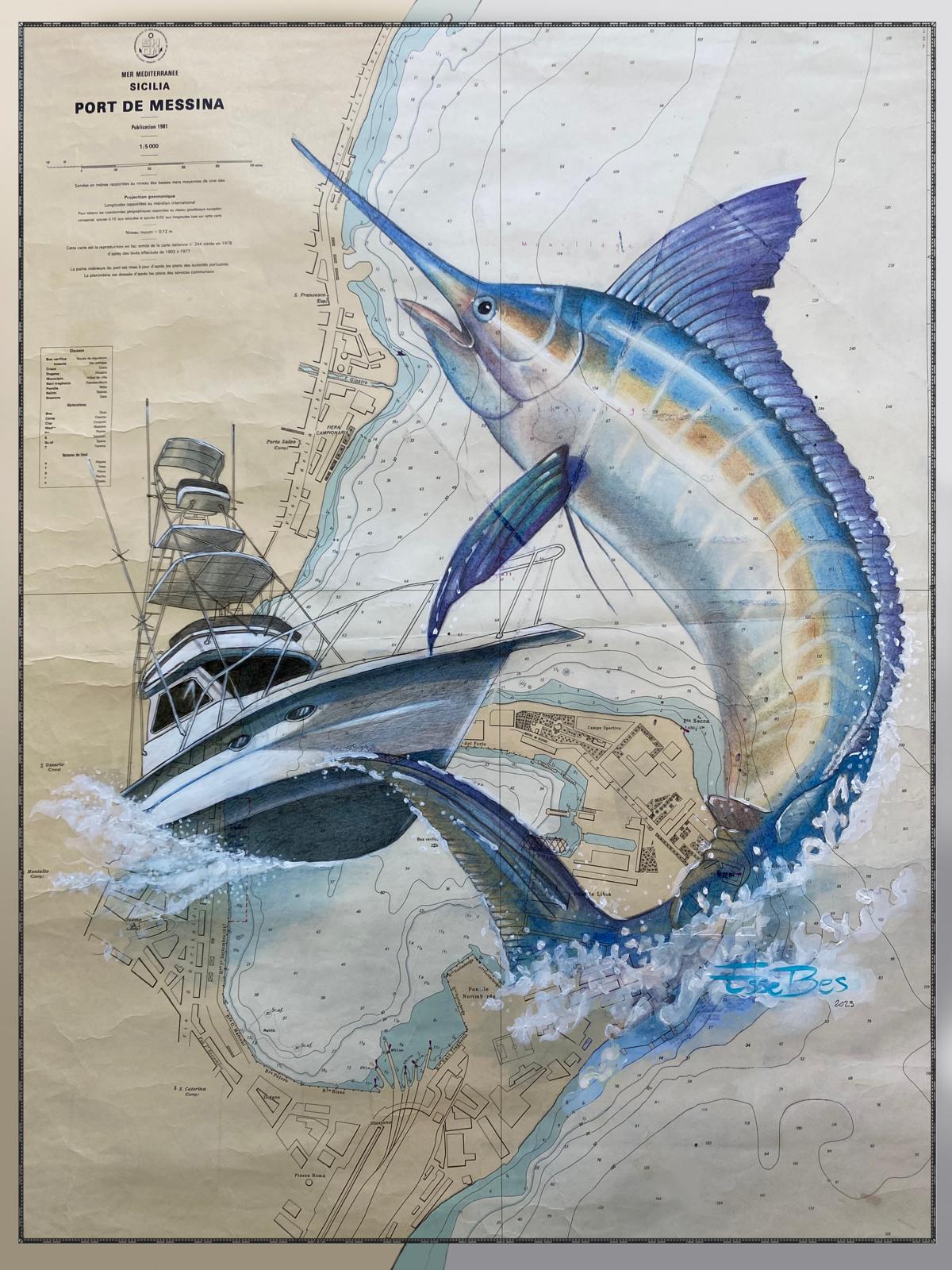
During Essebes’s years on the Gulf Coast, maritime imagery increasingly entered the work.
Coastal subjects were familiar territory for galleries, retailers and collectors, but simply reproducing the expected imagery was not particularly interesting to her. The question became how to take that visual world somewhere more personal.
Nautical charts offered an answer.
Rather than beginning with an empty canvas, Essebes could begin with a surface that already carried information: coastlines, depths, navigation marks, place names and routes. Painting over and through those existing marks allowed the chart itself to become part of the composition.
The map is not simply a background
Its lines and geography remain visible within the finished work, creating a relationship between the painted subject and a real place. A material originally designed to help someone navigate becomes part of another kind of visual journey.
Art Charts became another example of Essebes responding to what was already in front of her rather than forcing a predetermined result. Existing lines could be incorporated, obscured or allowed to interrupt the painting. The composition developed in conversation with a surface that already had its own visual structure.
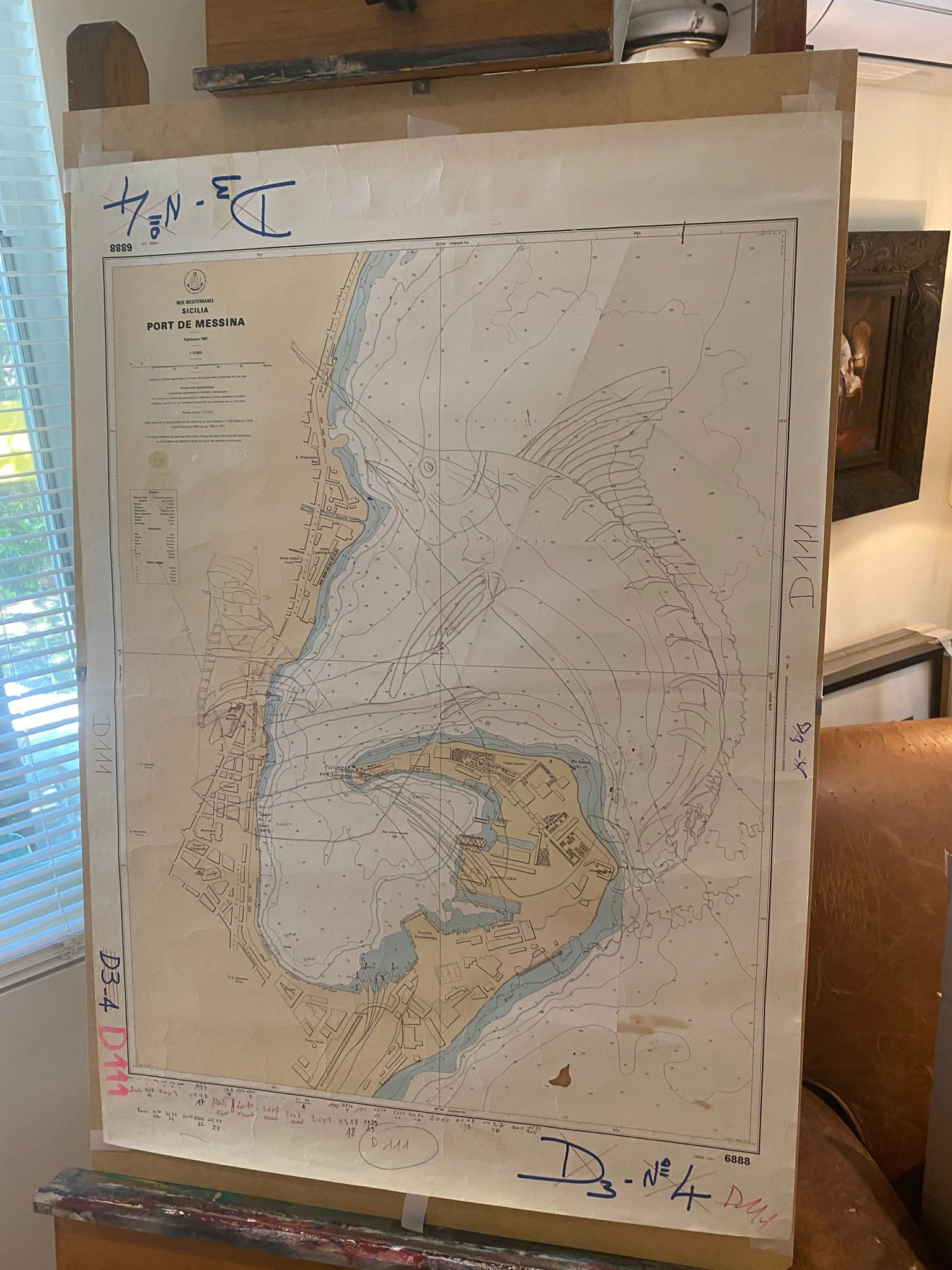
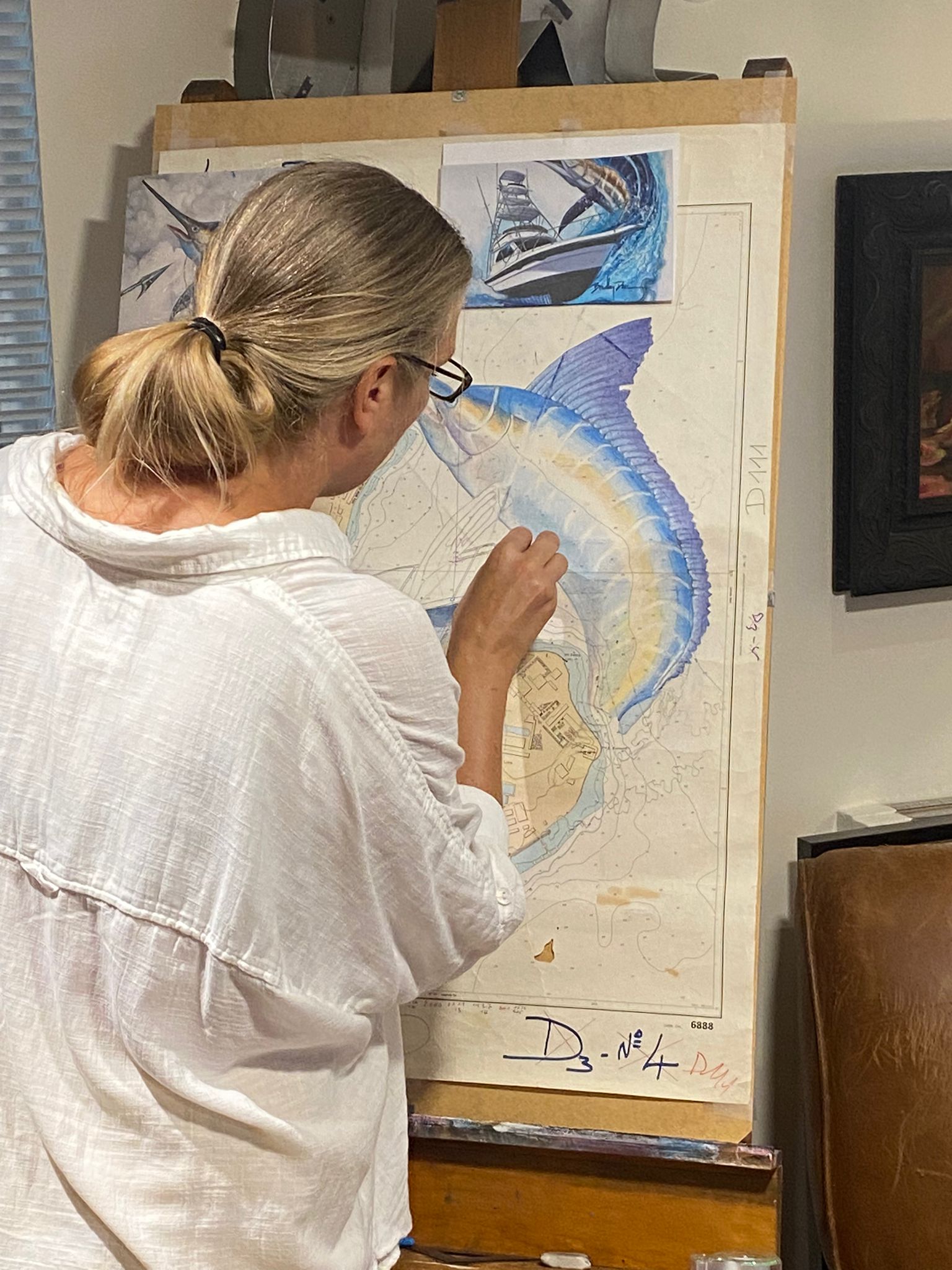
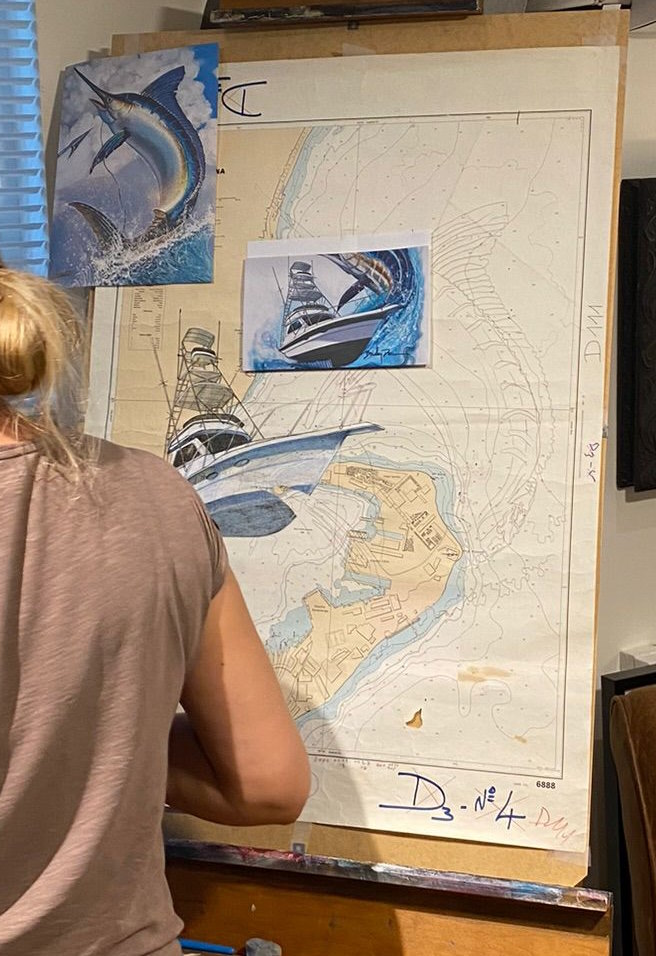
The Art Charts connect formal design, painting and mixed media through a simple, ongoing instinct: let the material already in front of you participate in what comes next. Inspired by coastal surroundings, Essebes began transforming nautical charts — maps created to guide journeys — into the foundation for painted worlds of color, movement and imagination. The lines, markings and history of the chart remain part of the artwork, creating a conversation between a real place and the story that emerges from it.
Explore Art Charts →