 EsseBes
 Final
Disbelief
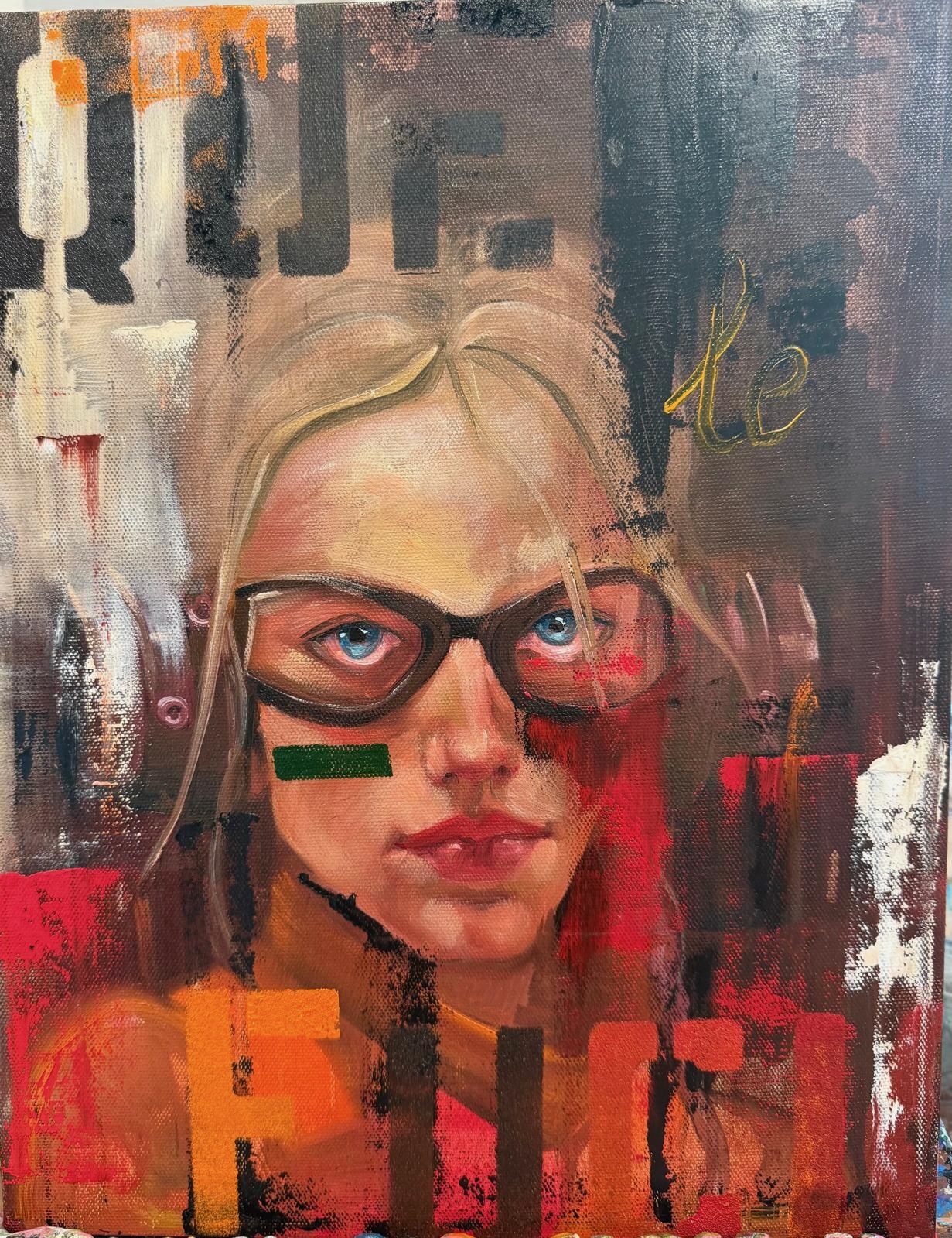
Disbelief began as a portrait inspired by atomic-punk and 1950s aviation. As the painting changed, so did the figure. The artist’s reaction became something like “Que le Fuck” — an intentionally mixed-language expression of the thought running through her head: How can this possibly be happening? At first, Essebes thought she was painting a victim. She eventually realized she was not. This was a child watching. Her innocence is still there. The question is whether the adults around her will protect her.
2026 · Oil on canvas
11 × 14 × 0.75 in (27.9 × 35.6 × 1.9 cm)
Signed · Unframed
Certificate of originality included
Details in this painting
- Blue eyes
- Innocence becoming witness. The child is not only being seen; she is watching what is happening around her.
- Goggles
- Protection. They grew from the aviation-inspired imagery behind the painting and began to take on the meaning of armor around innocence.
- Headphones
- Shielding. Another protective layer between the child and what is happening around her.
- Green mark
- Armor and protest. A protective visual element that also became part of the series’ recurring protest language.
- Red mark
- What gets through. The mark represents what can still reach a child despite attempts at shielding and protection.
During a renewed focus on oil and canvas painting, Essebes returned to portraiture — to feel paint moving from the brush, work with color, and return to a longstanding love of faces. The intention was to make something beautiful.
The painting began in atomic-punk imagery and the visual language of 1950s pilots: a young woman, blue eyes, goggles and green headphones. But it kept changing. A helmet appeared and was rejected — at one point, the artist thought it looked more like a basketball. Hair changed. Extra goggles came and went. A third eye was tried. Then the eyes multiplied.
As the figure became more serious and intense, she seemed to be witnessing something she could scarcely believe was happening. At the same time, the news occupying the artist’s thoughts began entering the canvas — the Epstein files, the abuse of children and the artist’s disbelief at what she perceived as an absence of accountability.
The thought running through the artist’s head became something like “Que le Fuck”: how can this possibly be happening? At first, Essebes thought she was painting a victim. She eventually realized she was not. This was a child watching.
The beautiful portrait had become something else. It became Disbelief — and the beginning of The Whole World Is Watching.
An ongoing protest series by Essebes about innocence, witness and the responsibility to protect children.
Explore the full series →